
Let’s talk depth vaginal depth. It’s a question whispered in bedrooms and Googled at 3 a.m.: How deep can a penis go inside a vagina? While urban legends and locker room lore offer wildly different answers, science gives us clarity (and centimeters).
Turns out, vaginal depth isn’t one-size-fits-all. It changes with arousal, anatomy, and even evolution. Penis size varies, too but not quite like you think. Whether you’re curious, concerned, or just scientifically horny, let’s take a deep dive into the vaginal canal and penis penetration range, backed by actual studies not Reddit threads.
1. The Average Vaginal Depth Isn’t Fixed

Science says: The average distended vaginal canal depth ranges from 10 to 16 cm (AdCS Matthes, 2024), and that’s when aroused or measured with gentle pressure. At rest, it’s often shorter.
The vagina is incredibly elastic. It can comfortably stretch to accommodate penetration, a menstrual cup, or even a baby (though, let’s not confuse those three experiences). It also flexes differently depending on arousal, when turned on, it literally lengthens and lifts to prepare for, well, incoming traffic. This natural adaptability is why “too deep” for one person might be just right for another, and why communication matters more than centimeters.
Pro Tip: Vaginas stretch like yoga pros, so check in with your partner instead of guessing the limits.
2. Penis Sizes vs Vaginal Depths: Do They Match?
Penis panic alert: While many worry about size, most penises fit comfortably within vaginal depths, science agrees. In fact, the average erect penis ranges from 12–16 cm, which fits the vaginal range nicely.
Even our chimpanzee cousins sport similar dimensions, with males averaging 14.4 cm (Dixson & Mundy, 1994). Nature, it seems, knew what it was doing. Studies show discomfort during intercourse is more likely due to technique, angle, or lack of arousal not sheer length. So instead of aiming for the back wall like it’s a carnival game, focus on rhythm, respect, and real-time feedback.
Pro Tip: You don’t need to “bottom out”—you just need to make sure both of you are enjoying the ride.
3. Transgender Vaginas: Science Matches Biology
Vaginoplasty advancements have allowed transgender women to achieve vaginal depths comparable to cisgender women. Using penile and scrotal skin, surgeons craft a neovagina averaging 13.3 cm (Smith et al., 2022) or 10.2 cm (Sigurjónsson et al., 2016).
That means transgender women with vaginoplasty can engage in penetration just like cisgender women with comparable depth and elasticity. The surgical outcomes aren’t just anatomical; they’re functional and affirming. For those undergoing gender reassignment surgery, these numbers provide reassurance that the mechanics of intimacy are very much possible and pleasurable.
4. Vaginal Depth Expands With Arousal and Even Evolution
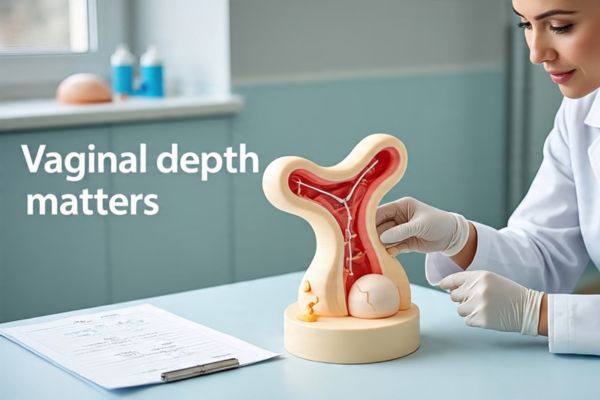
Research on female chimpanzees shows that sexual arousal can increase vaginal depth by up to 52% (Dixson & Mundy, 1994). Yes, more than half! This holds true in humans as well, though less dramatically.
The takeaway? Vaginas aren’t static, they’re responsive. Arousal causes the uterus to tilt upward, allowing more comfortable (and pleasurable) penetration. This also explains why rushing foreplay or skipping arousal can lead to discomfort.
From an evolutionary standpoint, this elasticity likely evolved to accommodate variation in male partners and improve reproductive success basically, nature wanted to make sex work for everyone involved.
Pro Tip: Arousal is nature’s lube and stretch instructor. Don’t skip it.
5. Medical and Sexual Health Implications of Vaginal Depth
Understanding vaginal depth is crucial for treating dyspareunia (painful intercourse), prolapse, and improving gender-affirming surgeries (AdCS Matthes, 2024). In other words, it’s not just about intimacy, it’s about health.
Conditions like genital prolapse can increase vaginal flexibility but also cause discomfort. Knowing the expected range of vaginal dimensions helps doctors tailor treatments, surgeons design better outcomes, and partners communicate better in bed. Depth alone doesn’t dictate satisfaction but mismatches or medical issues can make intimacy painful or awkward without proper awareness.
Pro Tip: If penetration feels uncomfortable, stop, talk, and (if needed) see a doc. It’s a medical, not moral, issue.
Conclusion
So, how deep can a penis go inside a vagina? About 10 to 16 cm—give or take arousal, anatomy, and angle. Penis size usually fits well within that range, and nature seems to have balanced the books beautifully.
For transgender women, neovaginas crafted via surgery match those dimensions impressively. And let’s not forget: depth varies with desire. Whether you’re curious or concerned, remember that pleasure depends less on inches and more on connection, communication, and care. Science says so and your partner probably does, too. So stop measuring in inches and start measuring in moans.
References
- AdCS Matthes. (2024). Primary Depth Dyspareunia is caused by the incompatibility of the size of the Penis with the Vagina
- Dixson, A. F., & Mundy, N. I. (1994). Sexual behavior, sexual swelling, and penile evolution in chimpanzees
- Smith, M. et al. (2022). Penile and Scrotal Skin Measurements to Predict Final Vaginal Depth With Penile Inversion Vaginoplasty
- Sigurjónsson, H. et al. (2016). Solely Penile Skin for Neovaginal Construction in Sex Reassignment Surgery

25 Secrets of Better Intimacy
Let's Upgrade your love life
Get It for Free Now.