
We’ve always thought of sperm as the little Olympic swimmers of reproduction racing towards the egg with nothing more than sheer determination and a wiggly tail. But modern science suggests these microscopic cells might be more complex than we give them credit for.
Far from being “dumb projectiles,” sperm contain thousands of proteins, advanced signaling systems, and even neuron-like receptors that help them navigate. Some researchers have even hinted at sperm having brain-like structures (yep, your sperm might be smarter than your Wi-Fi at times). In this article, we’ll dive into the surprisingly brainy world of sperm and explore what science has uncovered about their inner lives.
1. Sperm Carry Over 6,000 Proteins

For years, the common assumption was that sperm were nothing more than delivery drones carrying DNA. But proteomic studies have revealed that sperm actually contain more than 6,000 proteins (Amaral et al., 2014). These proteins aren’t just random molecules, they play roles in energy metabolism, programmed cell death (apoptosis), and even regulating the cell cycle.
Essentially, sperm are tiny biochemical factories packed with tools to ensure survival and function. This level of complexity shatters the outdated view of sperm as “just a head and a tail.” It’s like finding out the delivery guy isn’t just carrying pizza, he’s also a gourmet chef, electrician, and part-time coder.
Sperm are way more than “DNA missiles.” They’re complex micro-machines with thousands of moving parts.
Lovegrabber
2. Sperm May Have Brain-Like Structures
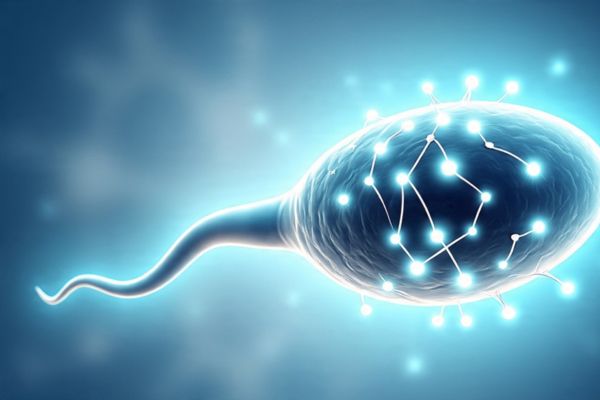
The idea sounds like science fiction, but some researchers have suggested sperm might contain “brain-like” structures (Barzideh, 2022). While this doesn’t mean sperm are writing poetry or solving math equations on their way to the egg, it does suggest they have organized systems that resemble neural networks.
These could help them process signals and respond intelligently to their environment. Imagine thousands of sperm, each with a tiny built-in GPS and decision-making chip, racing toward an egg, it’s less “mindless swimming” and more like coordinated strategy. While more research is needed to confirm just how “brainy” sperm really are, the possibility alone makes them fascinating cellular navigators.
3. Neuronal Receptors

Here’s where things get wild: sperm share several receptors typically associated with neurons in the brain (Meizel, 2004). These receptors help regulate exocytosis (the release of enzymes to penetrate the egg) and control motility. Essentially, sperm use some of the same biochemical tricks neurons use for communication and response.
This overlap suggests that nature is economical, it reuses powerful molecular tools across different cell types. So next time you think of sperm as “simple swimmers,” remember they have neuron-like controls helping them respond to their microscopic environment. In some ways, they’re little cousins of brain cells, adapted for a very different mission.
4. Sperm Use Computational Skills During Chemotaxis

When sperm get closer to the egg, the real magic begins: chemotaxis, or chemical navigation. The egg releases signals that sperm detect and respond to, adjusting their swimming path. Studies show that sperm use calcium signaling to calculate and adapt their movement in real time (Alvarez et al., 2014).
This is basically computation on a cellular level, they sense gradients, process the data, and steer accordingly. That’s not just “wiggling aimlessly”; that’s advanced problem-solving. In human terms, it’s like trying to find the pizza shop in a city by sniffing the air and recalculating your path every block.
Sperm don’t swim blindly, they “think” with calcium signals to navigate toward the egg.
Lovegrabber
5. The Bigger Picture: Why Sperm Complexity Matters
Understanding sperm’s complexity isn’t just cool trivia, it has huge implications for fertility science and medicine. If sperm can process signals, adapt their swimming, and use neuron-like receptors, then male fertility isn’t just about “sperm count.”
It’s also about sperm quality and intelligence. These findings may lead to better fertility treatments, diagnostic tools, and even contraceptives. On the forensic side, knowing sperm’s unique protein structures can help in crime scene investigations.
In short, treating sperm as “smart cells” rather than dumb swimmers opens new doors in science. It’s a reminder that biology rarely settles for simple solutions, it loves complexity.
Conclusion
So, do sperm have brains? Not in the “let’s sit down and do calculus” sense. But science is uncovering that these tiny cells are far from dumb. Packed with thousands of proteins, neuron-like receptors, and computational skills, sperm operate with surprising sophistication.
Some researchers even suggest they may have brain-like systems that help them navigate. Beyond the humor of imagining sperm with tiny IQs, this complexity has real-world importance—shaping how we approach fertility, contraception, and reproductive health.
The takeaway? Never underestimate a cell that can swim a marathon, dodge obstacles, and still find its way home. That’s smarter than half of us when GPS goes down.
References
- Amaral, A., Castillo, J., Ramalho-Santos, J., & Oliva, R. (2014). The combined human sperm proteome: cellular pathways and implications for basic and clinical science.
- Barzideh, A. (2022). Artistic Atlas of Brain Anatomy in The Human Sperm
- Meizel, S. (2004). The sperm, a neuron with a tail:‘neuronal’receptors in mammalian sperm
- Alvarez, L., et al. (2014). The computational sperm cell.

25 Secrets of Better Intimacy
Let's Upgrade your love life
Get It for Free Now.