
Foreplay gets a lot of hype. From magazine quizzes to rom-com advice, everyone’s telling you it’s the secret sauce to amazing Intimacy. But what if we told you science says otherwise? That while licking, kissing, and fumbling under the covers can be fun, they might not be the main event your orgasm is waiting for.
So before you invest in feather ticklers, let’s break down what research actually says about the best ways to heat things up.
1. Penile-Vaginal Intercourse Is the Real MVP for Health & Happiness
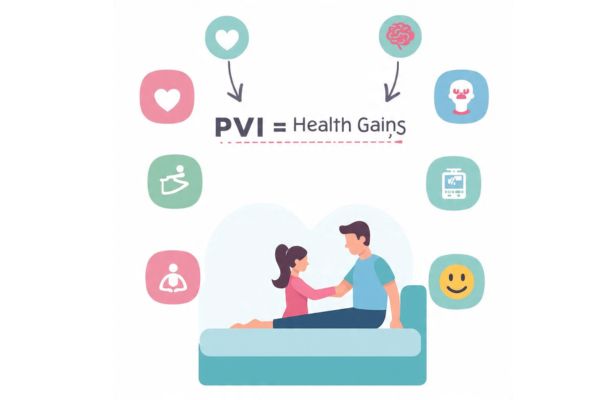
Let’s start with the big one. According to Brody (2010), penile-vaginal intercourse (PVI) is associated with better psychological and physiological health outcomes compared to other sexual activities. We’re talking improved mood, reduced depression, lower stress, and even cardiovascular benefits.
Why? Some researchers believe PVI promotes the release of hormones like oxytocin and prolactin, which are linked to bonding and relaxation. It’s not to say other forms of penetration aren’t pleasurable but if you’re looking for something that benefits both your mental well-being and physical health, plain ol’ intercourse might be doing more heavy lifting than your vibrating massage gloves.
2. Foreplay Is Common But Maybe Not Crucial
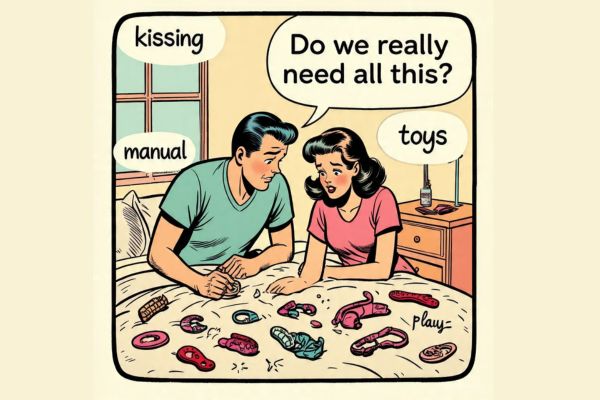
Let’s give credit where it’s due: foreplay is part of most people’s intimate lives. Back in the 1950s, Kinsey et al. (1954) found that foreplay especially kissing, manual stimulation, and oral intimacy was common practice in both heterosexual and homosexual couples.
But common doesn’t always mean necessary. Foreplay is often seen as a warm-up, but depending on your sexual preferences, it might just be… optional. For some, it’s the fireworks. For others, it’s just the trailer before the real movie. Bottom line? It’s not what you do, it’s how into it both of you are.
3. Climax Aren’t Always About Foreplay
Contrary to pop culture wisdom, Weiss & Brody (2009) found that women’s climax consistency is more strongly linked to the duration of PVI, not how long foreplay lasts.
In other words: you can rub and kiss for 45 minutes, but if the intercourse itself is over in two, the results may not be explosive. It’s not a license to skip foreplay entirely, but it’s a reminder that quality penetration time might matter more than teasing for half an hour. So focus less on creating a Cirque du Soleil act with feathers and more on connecting during the main event.
4. Foreplay Can Be Fun—Just Don’t Make It a Performance

Sure, foreplay is fun especially when it’s not forced. Think kissing, teasing, light touch, or even goofy giggling while undressing. The key here is to enjoy it, not turn it into a checklist of “touch all erogenous zones in under five minutes.”
Some couples treat foreplay like it’s the SATs. Relax! The goal is to build mutual anticipation, connect emotionally, and spark pleasure, not run a sensual obstacle course. Use it to explore, communicate, and feel each other out but don’t treat it like the only path to satisfaction. Especially when science says it’s not.
5. Best “Foreplay” Might Just Be… Better Penetration
Here’s the twist: maybe the best kind of foreplay is just better communication, longer intercourse, and more emotional presence. If the goal is intimacy, pleasure, and climax, focusing solely on traditional foreplay activities might be limiting.
Try talking more about what you like, taking your time during intercourse, or experimenting with positions and rhythm. According to the studies above, the duration and depth of connection during penetration could matter more than whether or not you start with a massage or mouth stuff. TL;DR: don’t skip to penetration but don’t assume foreplay alone will bring fireworks.
Final Thought:
Foreplay may be fun, traditional, and even expected but science shows it’s not always the most essential part of great intimacy. If you’re short on time, focus on connection, communication, and quality PVI instead of a lengthy pre-game show. Or as researchers might put it: it’s not how you start it’s how you thrust.
References:
- Brody, S. (2010). The relative health benefits of different sexual activities. Journal of Sexual Medicine, 7(s1), 133–143.
- Weiss, P., & Brody, S. (2009). Women’s body image and sexual satisfaction. Journal of Sex & Marital Therapy, 35(5), 343–359.
- Kinsey, A.C., Pomeroy, W.B., Martin, C.E. (1954). Sexual Behavior in the Human Female. W.B. Saunders.

25 Secrets of Better Intimacy
Let's Upgrade your love life
Get It for Free Now.