
We’ve all heard of muscle cramps, stomach cramps, even period cramps but sperm cramps? Yes, it’s a thing people talk about, and while it might sound like the title of a bad punk rock band, the science behind sperm movement is surprisingly fascinating.
Sperm aren’t just lazy little swimmers; they embark on a marathon through the female reproductive system, with hurdles, obstacles, and some serious pressure changes along the way.
But here’s the kicker: sometimes this process causes sensations that people describe as “sperm cramps.” So what’s really happening inside the body when sperm do their thing? Let’s dive in, keep it light, and unpack the science behind sperm cramps.
1. Sperm’s First Stop: The Cervical Filter
Once sperm are deposited in the vagina, they don’t just sprint toward the egg like in cartoons. Instead, they immediately enter the cervix, where cervical mucus plays gatekeeper. Think of it as a nightclub bouncer deciding who gets in.
Weak, poorly shaped, or lazy sperm get filtered out, while only the healthiest make it through. This is the body’s way of ensuring quality control (Suarez & Pacey, 2006). But here’s where the cramp-like sensation might come in: that filtering process plus the sudden rush of activity can trigger uterine pressure changes, making it feel like something is tightening or “cramping.”
2. Uterine Contractions: Nature’s Little Push
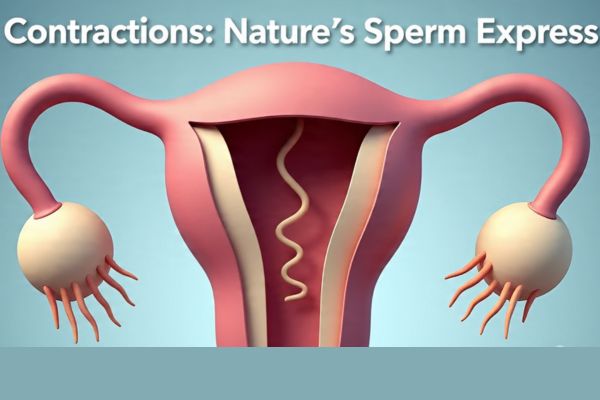
Sperm don’t get to the Fallopian tubes on their own power alone. The uterus gives them a helping hand or more accurately, a helping squeeze.
Uterine contractions help guide sperm upward, pushing them in the right direction (Suarez & Pacey, 2006). These contractions are partly triggered by semen itself. Imagine giving sperm a fast-track ticket on a subway—except this subway has no seats and everything’s moving upward.
The squeezing action, however, can sometimes feel like a cramp or dull ache, especially since the pressure inside the uterus spikes during this stage (Shafik & Shafik, 2006).
Mild cramp-like sensations post-sex are usually normal, it’s just your body giving sperm a little “boost.”
lovegrabber
3. The “Semen Suction” Effect
When semen enters the vagina, it actually triggers a rise in uterine pressure that helps “suck” sperm into the uterine cavity (Shafik & Shafik, 2006). Yep, your uterus is essentially a sperm vacuum.
This suction happens because of sperm themselves, not just the fluid they swim in. Interestingly, normospermic semen (with a normal sperm count) produces stronger pressure increases compared to low-sperm-count samples.
This could explain why sometimes people report stronger cramp-like sensations, it’s literally the body reacting to a healthy batch of swimmers.
Note: Stronger cramps might be a sign of healthy sperm density, it’s biology’s way of cheering them on.
4. The Long Road to the Fallopian Tubes
Only a few thousand sperm out of millions actually make it to the Fallopian tubes, and once there, sperm aren’t left free-floating; they’re stored in a reservoir, waiting for ovulation (Suarez & Pacey, 2006).
This waiting game can cause subtle changes in muscle tension and contractions, which may feel like cramps. Remember, the body isn’t just passively hosting sperm, it’s actively managing them, sorting, storing, and releasing at just the right time. Some people describe this stage as a dull, pulling sensation rather than sharp cramps.
5. Sperm Production: The Long Prep Work

Cramps aren’t just about the journey inside the uterus, they can also relate back to sperm production itself. Sperm are created in the testicles over a 74-day process called spermatogenesis, then mature in the epididymis for another 11–12 days (Franjić, 2023).
That’s like training for months before finally running the marathon. When ejaculation is delayed or frequent, some men report a “blue balls” sensation, which can feel cramp-like. It’s not the same as uterine cramps, but it’s another way sperm activity and build-up can be linked to discomfort.
Pro Tip: Regular ejaculation helps keep sperm production smooth and reduces those cramp-like buildups.
Conclusion
So, what are sperm cramps? They’re not a medical condition on their own, but rather a mix of natural body responses to sperm production, movement, and uterine contractions. From the cervix filter to the uterus suction effect, sperm travel is a full-body event.
Sometimes this creates sensations that feel like cramps, mild, temporary, and usually a sign that everything’s working just as it should. The next time someone mentions “sperm cramps,” you’ll know it’s not just slang, it’s biology with a sense of humor.
References
- Suarez, S.S. & Pacey, A.A. (2006). Sperm transport in the female reproductive tract.
- Shafik, A., & Shafik, I.A. (2006). A study on the etiology of uterine pressure rise on semen deposition in the vagina or uterus.
- Franjić, S. (2023). Sperm are Very Small Male Sex Cells

25 Secrets of Better Intimacy
Let's Upgrade your love life
Get It for Free Now.