
So, you’ve probably heard that sperm can survive up to five days in the female body. But is that true or just reproductive folklore passed down by nervous teenagers and biology teachers?
Whether you’re trying to conceive or trying not to, understanding sperm survival is crucial. Fertility doesn’t come down to a single “magic moment”, it’s more like a five-day window of opportunity, and sperm are the unsung marathon runners of that story.
In this post, we dive deep into how long sperm live, what percentage survive five days, and what it all means for intimacy, timing, and baby-making success.
1. Sperm Can Survive 3–5 Days… But Most Don’t

Sperm are hardy little swimmers, but not all of them have what it takes to make it to Day 5. According to Vishwanath & Shannon (1997), sperm can remain viable for 3–5 days at body temperature in the right environment.
But here’s the kicker: fertility potential drops by 3–6% per day after ejaculation. In ideal conditions like a woman’s cervical mucus just before ovulation, some sperm will survive five days, but we’re talking about the elite squad here, not the entire army.
Most sperm are dead by Day 2 or 3. So while five-day survival is possible, it’s not typical for the majority.
Pro Tip: If you’re trying to conceive, time intercourse within 2 days before ovulation to catch the most viable swimmers.
2. Cervical Mucus is Sperm’s VIP Lounge
You know what’s really underrated? Cervical mucus. Right before ovulation, it turns into the perfect survival gel for sperm. Perloff & Steinberger (1964) found that sperm can survive up to 5–7 days in this slippery miracle fluid.
The mucus provides nutrients and shields sperm from the acidic vaginal environment. Without it, sperm survival drops dramatically. It’s like going from a luxury hotel to camping in a thunderstorm.
So if you’re wondering why the “fertile window” includes days before ovulation, thank cervical mucus, it keeps sperm alive long enough to meet the egg once it’s released.
3. Most Sperm Die Fast
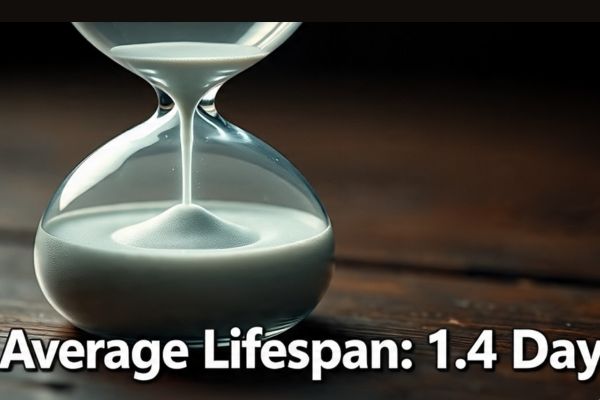
While 5-day sperm survival gets all the headlines, Weinberg & Wilcox (1995) modeled actual conception probabilities and found the average sperm lifespan inside the female reproductive tract is just 1.4 days. That’s right, on average, sperm don’t even make it to Day 2.
Sure, some might live longer, but most are like interns: full of enthusiasm but gone by the weekend. That’s why timing intercourse to ovulation is so crucial. One romp on a Monday won’t guarantee fertilization on Friday unless you’re betting on Olympic-grade swimmers.
4. Not All Sperm Are Created Equal
You might assume a man’s sperm is always ready to go, but the World Health Organization (WHO) says otherwise. According to Cooper et al. (2010), healthy semen should have at least 15 million sperm per ml and at least 32% with progressive motility aka sperm that can actually move toward the egg.
If semen quality is poor, even five-day survival won’t help. Think of it like sending soldiers into battle without armor or weapons. No matter how long they survive, they won’t win the war. This is why fertility testing often starts with a simple semen analysis.
Pro Tip: Guys, don’t smoke, overheat your junk, or wear tight underwear if you’re trying to be fertile.
5. Timing Is Everything
Even if sperm survives five days, if there’s no egg waiting at the end of the road, it’s all wasted effort. The egg itself lives less than 24 hours once released.
So in terms of pregnancy, the fertile window is really defined by how long sperm can hang out and wait. The sweet spot? Have intercourse one or two days before ovulation. That way, sperm are already in position when the egg shows up fashionably late. Remember: the sperm can wait a bit; the egg won’t.
Conclusion
So, what percentage of sperm actually survive 5 days? A small, determined bunch maybe the top 5–10%. The rest check out early, and the odds aren’t in their favor.
While five-day survival is biologically possible, it’s more like the exception than the rule. What really matters is quality sperm, fertile mucus, and good timing. Understanding sperm lifespan helps couples maximize chances of conception or avoid pregnancy, if that’s the goal.
Whether you’re tracking cycles or just curious about what happens after ejaculation, remember: sperm may be tiny, but their survival story is anything but boring.
References & Citations
- Vishwanath, R., & Shannon, P. (1997). Do sperm cells age? A review of the physiological changes in sperm during storage at ambient temperature.
- Perloff, W. H., & Steinberger, E. (1964). IN VIVO SURVIVAL OF SPERMATOZOA IN CERVICAL MUCUS.
- Weinberg, C. R., & Wilcox, A. J. (1995). A model for estimating the potency and survival of human gametes in vivo.
- Cooper, T. G., et al. (2010). WHO laboratory manual for the examination and processing of human semen.

25 Secrets of Better Intimacy
Let's Upgrade your love life
Get It for Free Now.